RCF Brand Logo
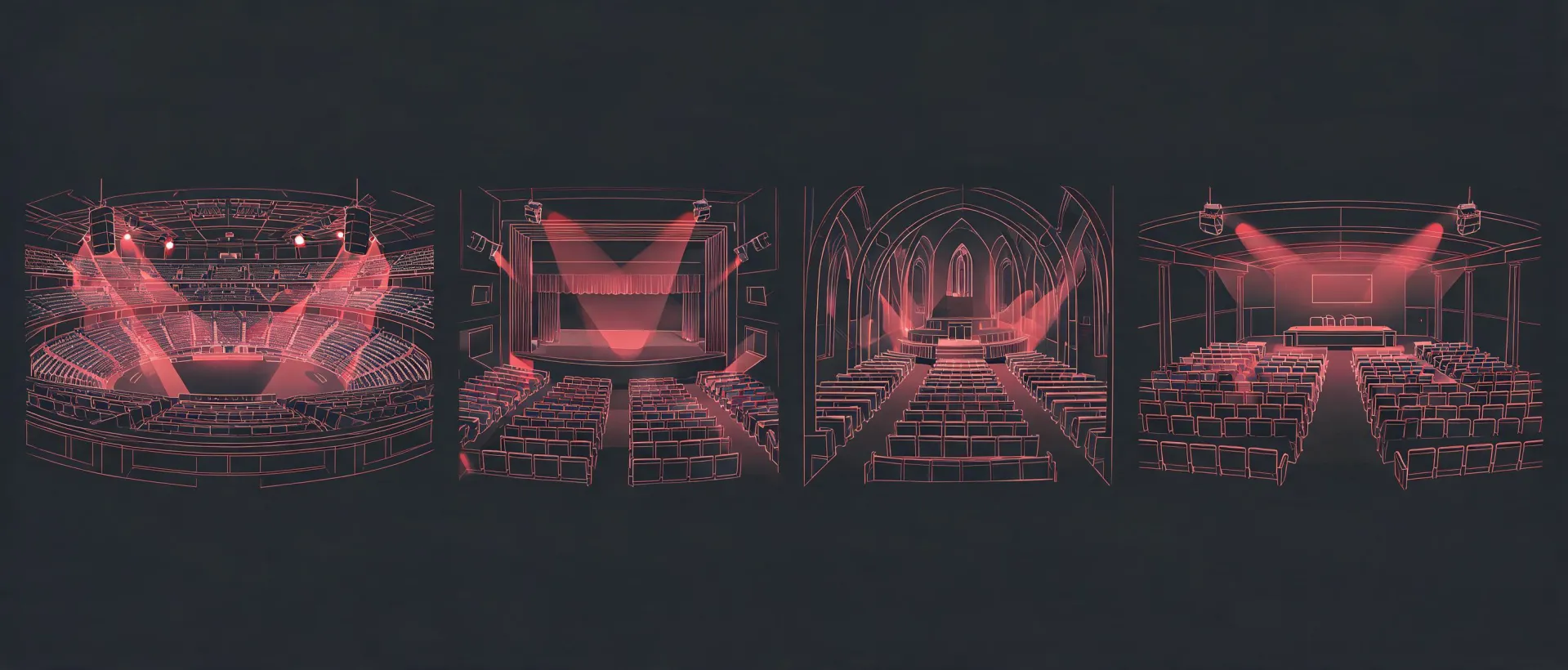
Cross-section illustration of professional audio coverage across venue types

VENUE FIT

RCF system criteria change with the audience space

Arena throw, theatre sightlines, worship intelligibility and corporate control are different design problems. Compare them by coverage, headroom, mounting, environment and operating workflow.

APPLICATION BRIEFS

Define the acoustic job before selecting a format

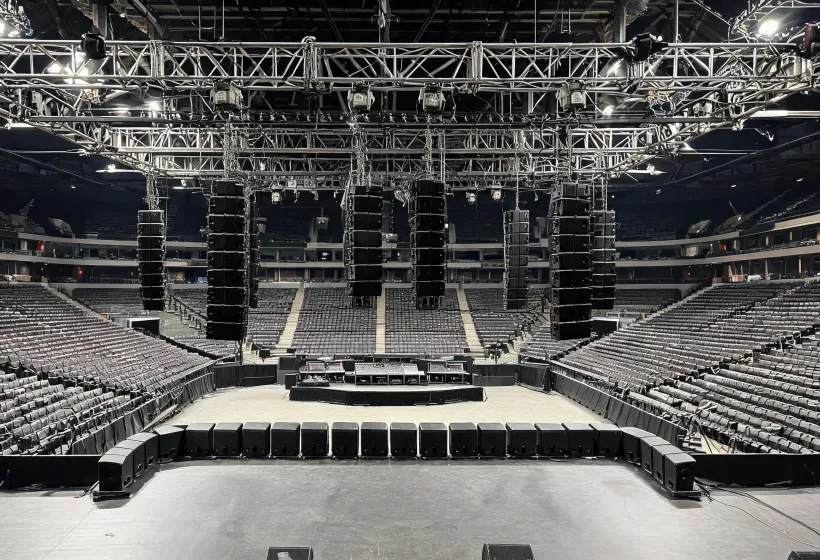
Touring sound system in an arena

Touring & Live Events

Start with audience depth, trim height, truck pack, setup schedule and local rigging limits. Long-throw coverage may favor an array, yet an array with the wrong length or splay can create uneven level and excessive overlap. Low-frequency design must consider subwoofer count, spacing, polarity, delay and the behavior behind the array.

  • Record flown weight and approved hardware
  • Verify front, middle and remote listening positions
  • Plan weather protection for exposed deployments
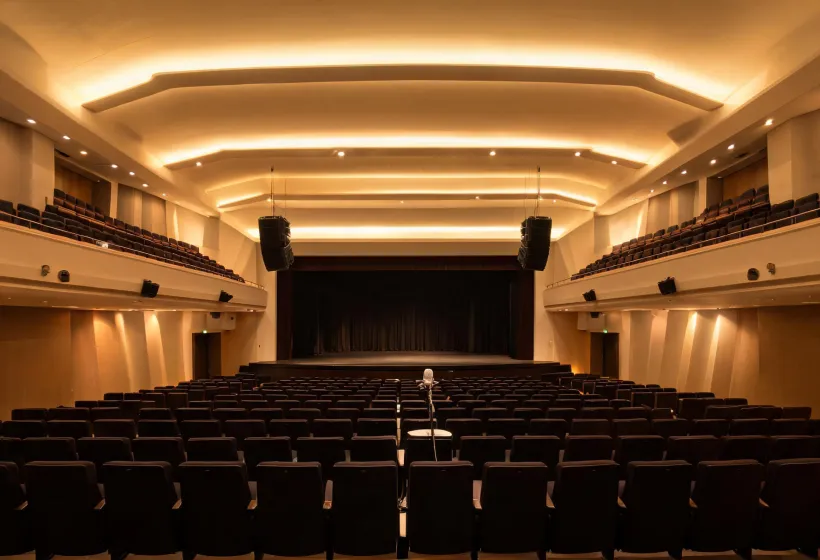
Installed audio in a performing arts venue

Performing Arts & Theatre

Speech, music and theatrical effects share sightline and noise-floor constraints. Model balcony coverage, under-balcony delay, front fill and stage-to-audience geometry. A visually discreet enclosure may reduce architectural impact but can limit low-frequency extension or service access; those compromises should be stated, not concealed.

  • Map every listening plane and obstruction
  • Align delays with the main acoustic arrival
  • Store performance and speech operating states
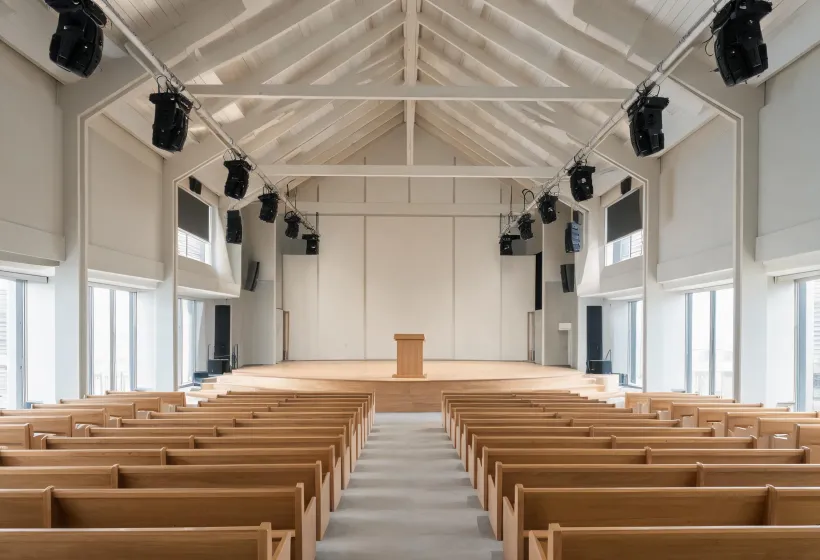
Installed sound in a house of worship

Worship & Community Spaces

Speech intelligibility, music dynamics and volunteer operation often pull the design in different directions. Coverage and direct-to-reverberant ratio matter more than adding equalization after installation. Controls should expose the tasks operators need while protecting crossover, limiter and delay settings that define system safety.

  • Prioritize consistent speech coverage
  • Separate operator controls from engineering parameters
  • Document assisted-listening and paging interfaces
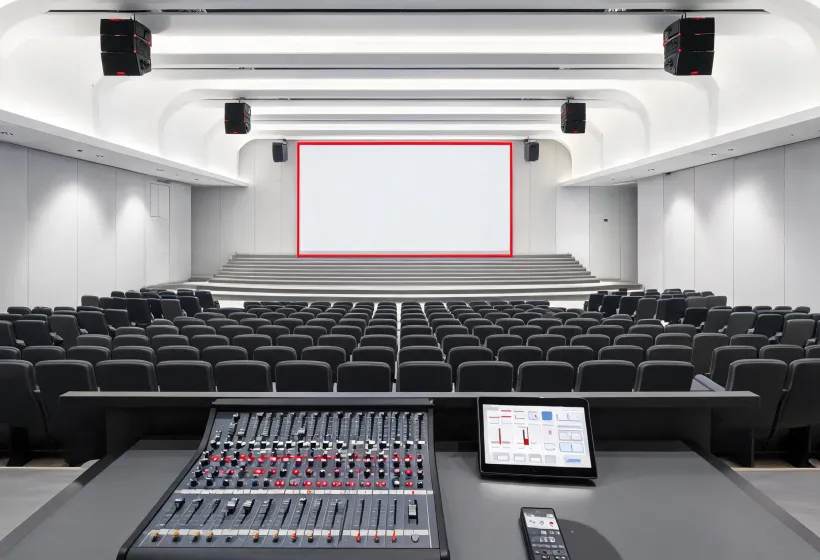
Corporate auditorium audio system

Corporate, Education & Hospitality

Distributed rooms prioritize speech, source routing, zoning and predictable recovery. Ceiling or compact surface loudspeakers can simplify architectural integration, but coverage spacing, transformer taps where applicable, latency and background-noise conditions still require calculation. A simple user interface depends on careful engineering behind it.

  • List source priorities and room-combine states
  • Check coverage against occupied noise level
  • Provide a nontechnical recovery procedure

SELECTION CONSIDERATIONS

Point source, line array or distributed system?

No architecture wins every comparison. Use the checklist to expose the trade-off that matters for the room.

ArchitectureUseful whenBoundary to check
Point sourceCompact or zoned coverage with defined directivityThrow, overlap and mounting height
Line arrayLong or vertically complex audience geometryArray length, splay, weight and near-field level
DistributedBroad low-level speech and background program zonesSpacing, latency, taps and architectural access

DESCRIBE THE VENUE

Convert the room into selection criteria

Send the plan, elevations, audience use, program material, mounting restrictions, available power and operational schedule. If the venue changes configuration, describe each state separately.